
Industry Applications
Industry Applications
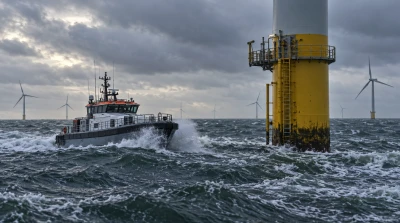
Why Offshore Wind Demands More from Wiring Materials: Three Environmental Challenges
Offshore wind turbines face salt spray, wide temperature swings and UV exposure for years, and maintenance requires a vessel or a crane. Turbine design and project certification are based on the IEC 61400 series, and in major markets class societies such as DNV and ABS carry out project and product verification. This article breaks down three environmental challenges and what they mean for cable ties, cable glands and other wiring materials.
2026-11-09 Read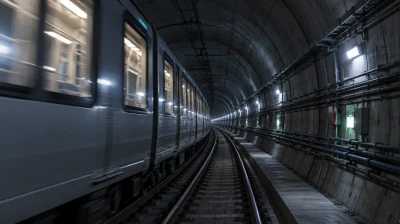
EN 45545-2 Explained: How HL1, HL2 and HL3 Are Assigned and How to Check Your Cable Ties
EN 45545 is the European fire safety standard for railway vehicles. The hazard level (HL) is set by the vehicle's operation category (OC1 to OC4) and design category (N, A, D, S). Materials are then assessed against requirement sets R1 to R26; cable ties fall under R22 (interior) and R23 (exterior). This guide explains the logic and shows how to check KSS cable ties before submission.
2026-11-02 Read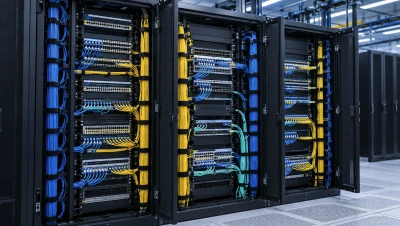
Why Data Center Cabinets Are Moving to 800 mm: ANSI/TIA-942-C Explained
ANSI/TIA-942-C, published in May 2024, sets a minimum cabinet width of 800 mm in the main, intermediate and horizontal distribution areas (MDA, IDA, HDA) and removes the LC/MPO-only rule in distributors, opening the way for very small form factor (VSFF) connectors. This article explains the background and what it means for wiring duct, cable clamps and cable management supplies.
2026-10-26 Read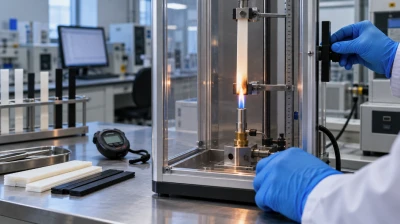
UL94 Flame Ratings Explained: 94V-0 vs 94V-2 and How to Specify Correctly
UL94 flame ratings run from HB (lowest) through V2 and V1 to V0 (highest). This guide explains the four classes and shows how they map to real KSS catalog parts: mainstream CV series cable ties are 94V-2, 94V-0 requires the CV-V0 series, and the MHF-4040 duct carries both halogen-free and 94V-0 marks.
2026-10-19 Read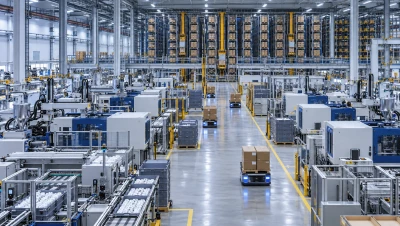
ISO 9001, 14001 and 45001: How a Management System Supports Stable High-Volume Supply
ISO 9001, ISO 14001 and ISO 45001 cover quality, environment and occupational safety. This article explains what each certificate covers, sets them beside the KSS production scale (a 500,000 square meter dedicated site, 50 million cable ties per day and an automated warehouse), and shows how a management system supports stable high-volume supply. It also explains why a system certificate is not a product certificate.
2026-10-12 Read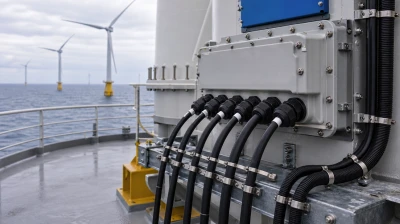
How to Read IP Ratings: What Separates IP68 from IP55, and What to Check When Selecting
IP ratings indicate two separate levels of protection against dust and water, and IP68 does not simply mean “more waterproof” than IP55. This guide explains the practical differences between IP68 and IP55 and compares the protection ratings of KSS cable glands and conduit fittings, including AG, CAG, EG, AGJ, NPT, BG, and BM series. It also covers the three key installation requirements for achieving the specified IP rating—proper sealing washers, correct cable diameter, and sealing unused openings—and provides selection guidance for outdoor, wind power, industrial, and control cabinet applications.
2026-10-05 Read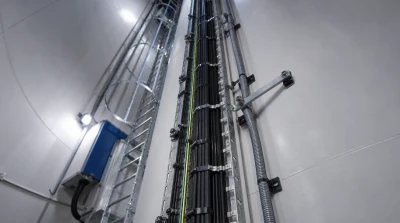
Cable Tie Selection for Wind Power: Where Exactly Is the Line Between Stainless Steel and Weather-Resistant Nylon?
Wind farms expose cable management systems to very different conditions, including heat, vibration, UV exposure, salt spray, corrosion, and difficult maintenance access. This guide compares KSS stainless steel cable ties—BST, BCT, ASTN, and RSTN—with weather-resistant nylon options such as CV-W and CV-N612. It explains cable tie selection across four wind turbine zones, when stainless steel is preferable to nylon, installation tool requirements, and key certification checks for wind power and offshore projects.
2026-09-28 Read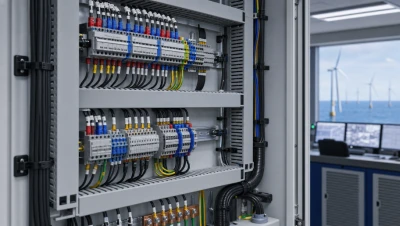
DNV, Lloyd's Register and ABS Approval for Cable Ties: Why It Matters and How to Check the Covered Part Numbers
Summary
Offshore wind and marine projects require cable management products whose certification scope matches the exact part numbers used. This article explains the DNV, Lloyd’s Register, and ABS approvals covering selected KSS cable tie series, compares their certification scopes, and highlights applications in offshore wind nacelles, towers, substations, and control cabinets. It also outlines key checks for product selection and project submission to help engineers, developers, and system integrators avoid certification mismatches.
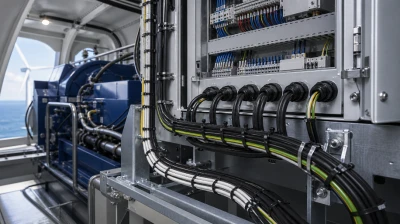
Wind Power and Offshore Wind Cable Management: The Complete Guide to KSS Class-Society Certified Cable Ties
Offshore wind installations face demanding conditions such as salt spray, temperature fluctuations, and challenging maintenance environments. This article introduces KSS marine classification society-certified cable ties, stainless steel cable ties, and IP68 dustproof and waterproof cable glands, covering their applications in nacelles, wind turbine towers, and control rooms, along with key product specifications and certification scopes. It provides practical guidance to help wind farm developers and system integrators select suitable cable management solutions.
2026-09-14 Read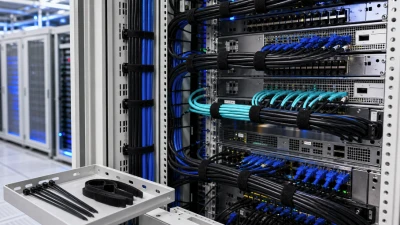
Cable Ties vs. Hook-and-Loop Straps: Choosing the Right Cable Management for Data Centre Racks
Nylon cable ties or hook-and-loop straps—which should you choose for data centre racks? Compare fastening methods, reusability and ease of maintenance, with KSS product specifications and application examples to help you select the right option for your cables and frequency of changes.
2026-09-08 Read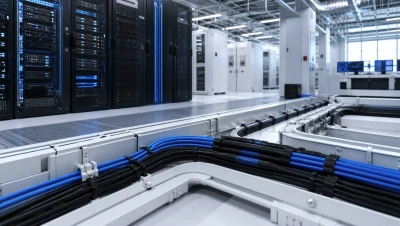
What Are Halogen-Free Materials, and Why Do Data Centers and Renewable Energy Projects Require Them?
Why do data centers and renewable energy projects specify halogen-free materials? Learn the differences between halogen-free, low-smoke zero-halogen and flame-retardant requirements, with KSS wiring duct, heat-shrink tubing and stainless steel cable tie examples to guide product selection and specification checks.
2026-08-18 Read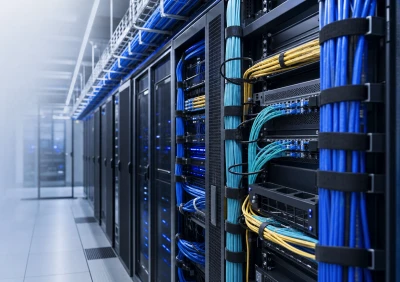
Cable Management for AI Servers and Data Centers: The Complete Guide to KSS Halogen-Free, Flame-Retardant Materials
KSS combines halogen-free material technology (IEC 61249-2-21) with UL94 V-0 flame retardance to supply the full range of cable management consumables for AI server cabinets and data centers: hook-and-loop straps, halogen-free wiring ducts, flame-retardant cable ties, wire markers, mounting bases, conduits and terminals. A competitive second-source option for system integrators and data center owners.
2026-08-04 Read- 1