
Closed-End Connectors vs. Crimp Terminals: Getting Panel Terminations Right
Closed-End Connectors vs. Crimp Terminals: Getting Panel Terminations Right
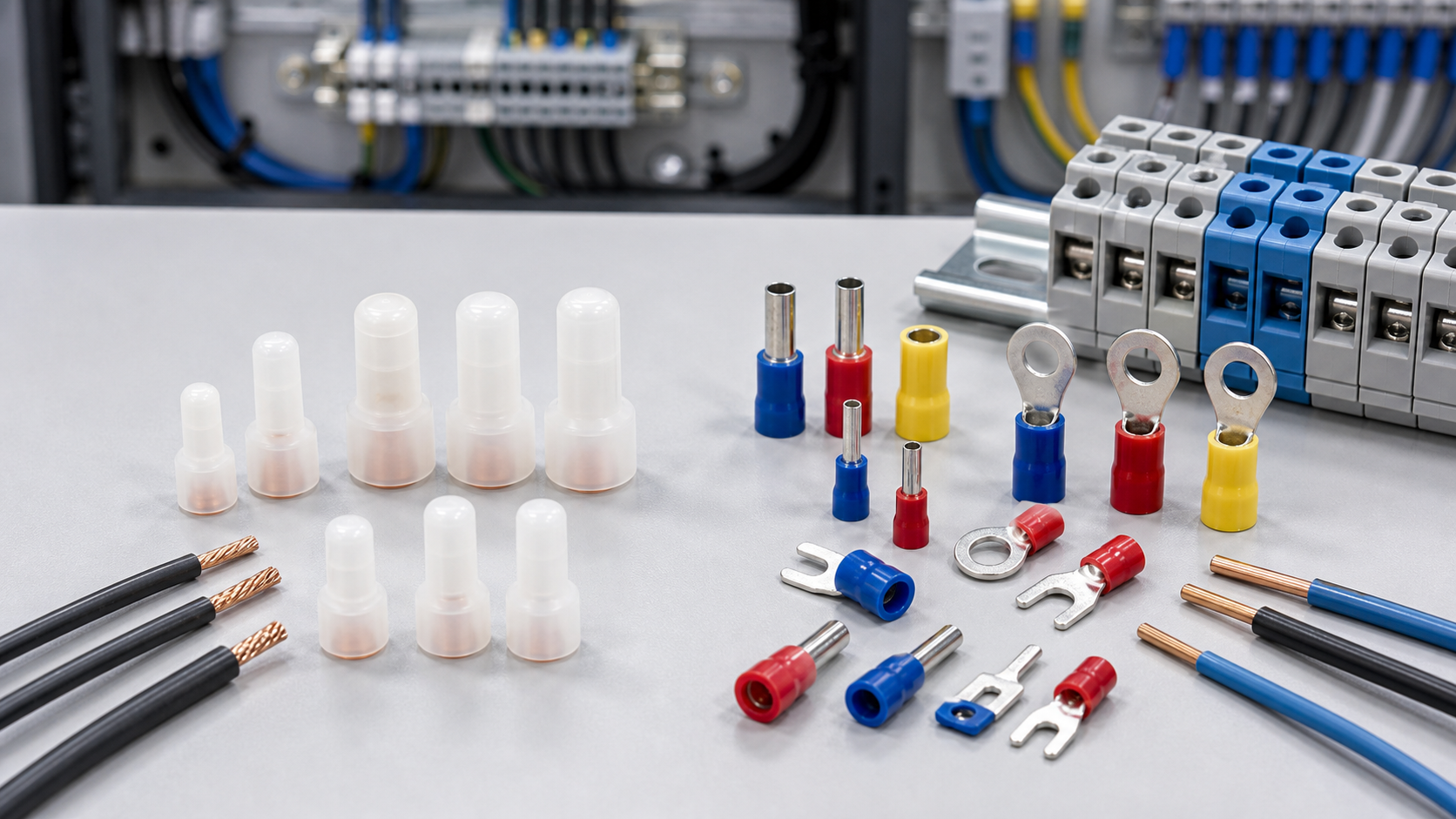
When wiring a control panel or distribution board, drawings often list “closed-end connectors,” “crimp terminals,” and “terminal blocks” side by side—and engineers new to panel work often assume they are just different names for the same thing. They are not. Mixing them up wastes money at best, and at worst leads to a failed inspection or a real safety concern. Here is how the two differ, using actual specifications from the KSS product catalog.
1. Closed-End Connectors: sealing a wire end, not connecting it
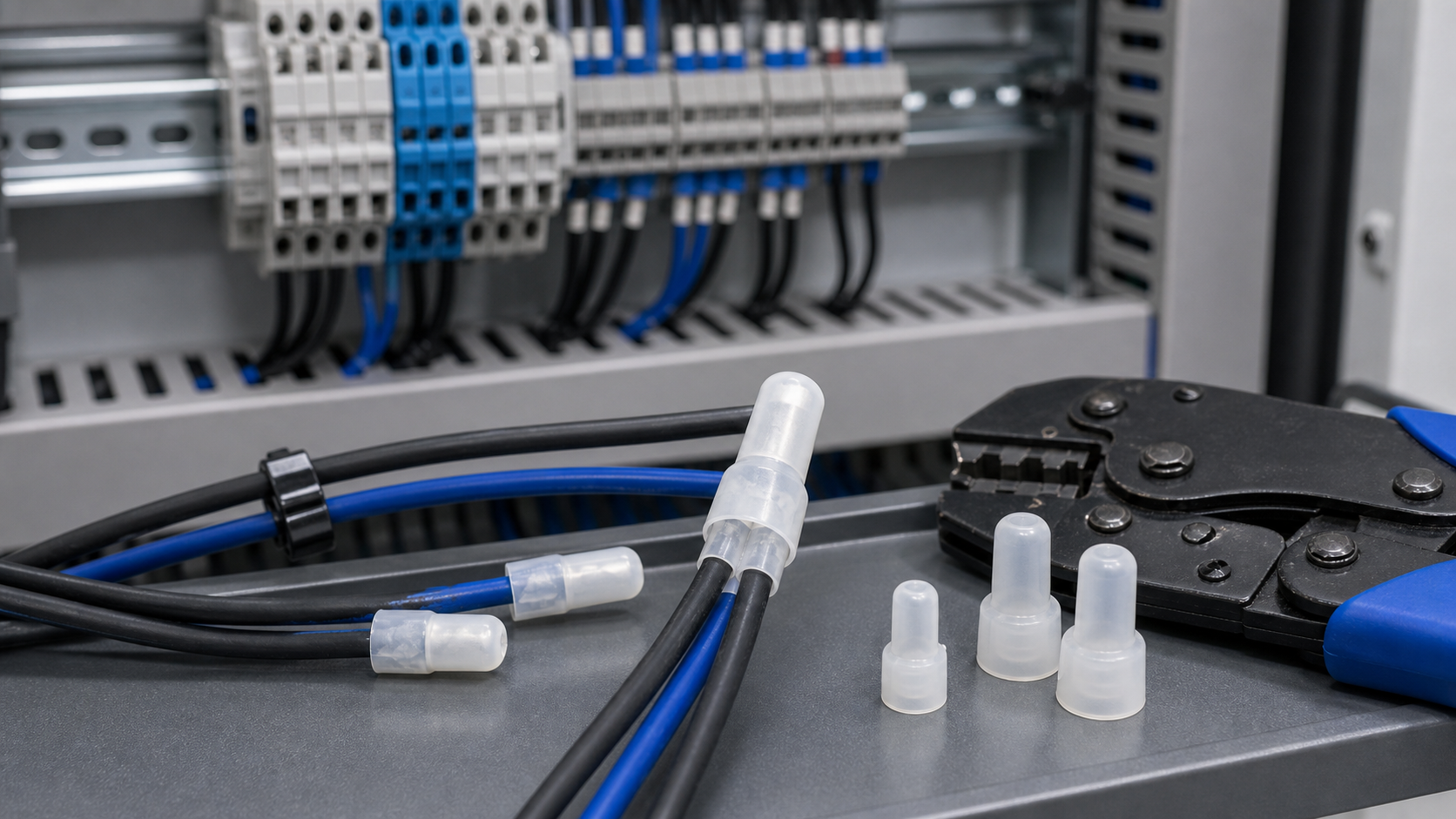
A closed-end connector crimps and seals the end of one or more bare conductors; it provides no external electrical connection point. Put simply, its job is to let a length of wire safely connect to nothing—typically for spare wires inside a control box, reserved maintenance leads, or the ends of spare PLC / relay contact wires—preventing conductor oxidation, shorting, or accidental contact with live parts.
The KSS CE series spans CE-1 / CE-1V0 through CE-8 / CE-8V0, built from a copper barrel with UL-recognized NYLON66. It is offered in two flame ratings—94V-2 (standard) and 94V-0 (flame-retardant)—covers conductor cross-sections of 1.25–8.0 mm², and carries UL (E116091) and CSA (97798) certification.
2. Crimp Terminals: the parts that actually make the connection
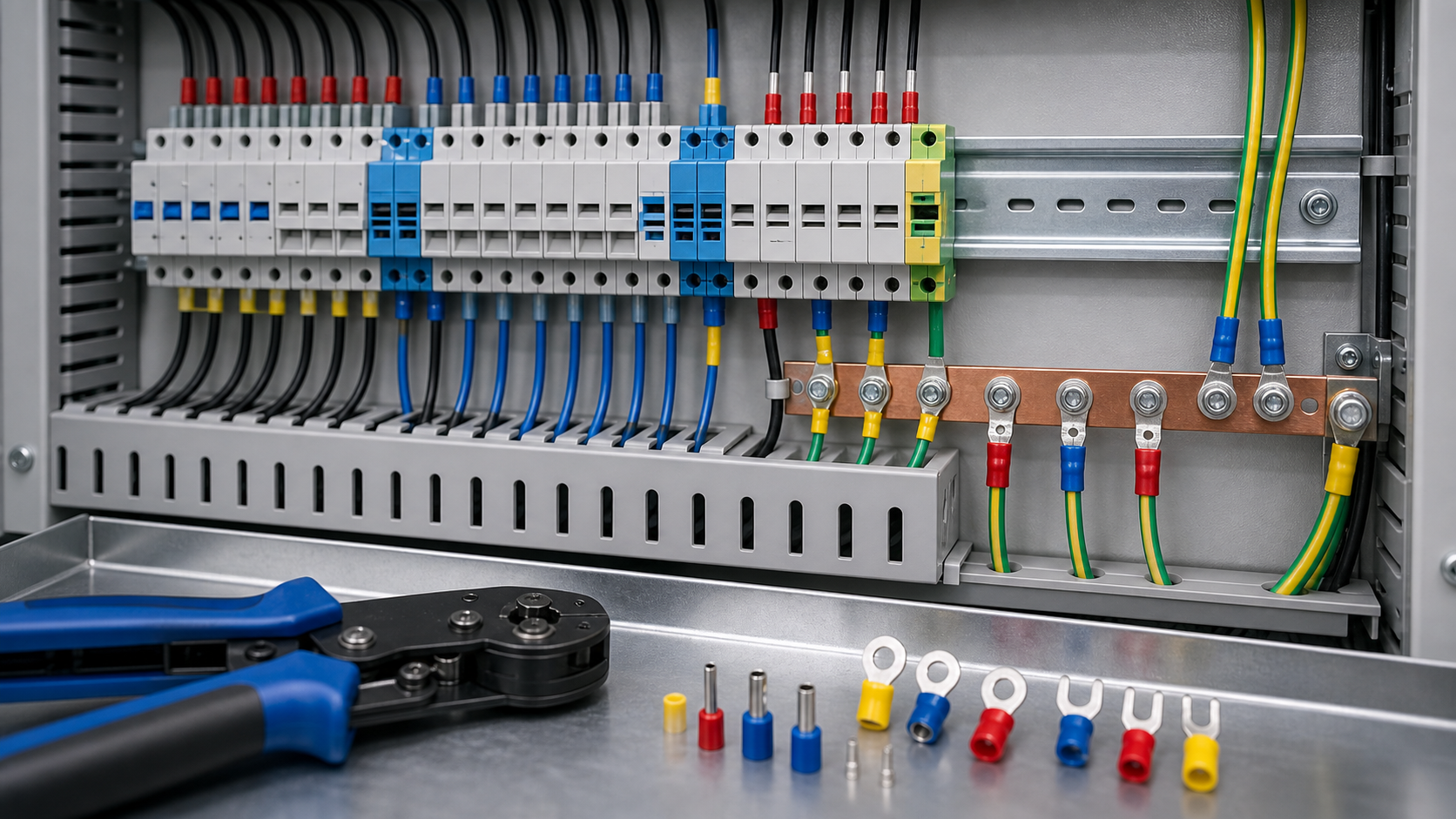
Crimp terminals are what create the real electrical connection between a conductor and a screw terminal block, ground bar, or device terminal—the current-carrying contact. They come in several shapes, and selection starts with confirming the mating terminal-block hole size, the conductor cross-section, and whether an insulation sleeve is required.
KSS offers two main families. ET / EW European-style ferrules (tubular crimp terminals) cover 0.25 mm² to 150 mm², made from a copper barrel with an insulated sleeve, color-coded to DIN / German / French color systems for quick on-site gauge identification. Separately, R (ring), Y (spade), H (hook), and PIN bare and insulated terminals are listed in the catalog with a full part-number index and screw-hole cross-reference; some individual part numbers do not include a standalone dimensional spec page, so for formal quotes or drawing confirmation we recommend requesting the current valid part numbers directly from our sales team.
3. The difference at a glance
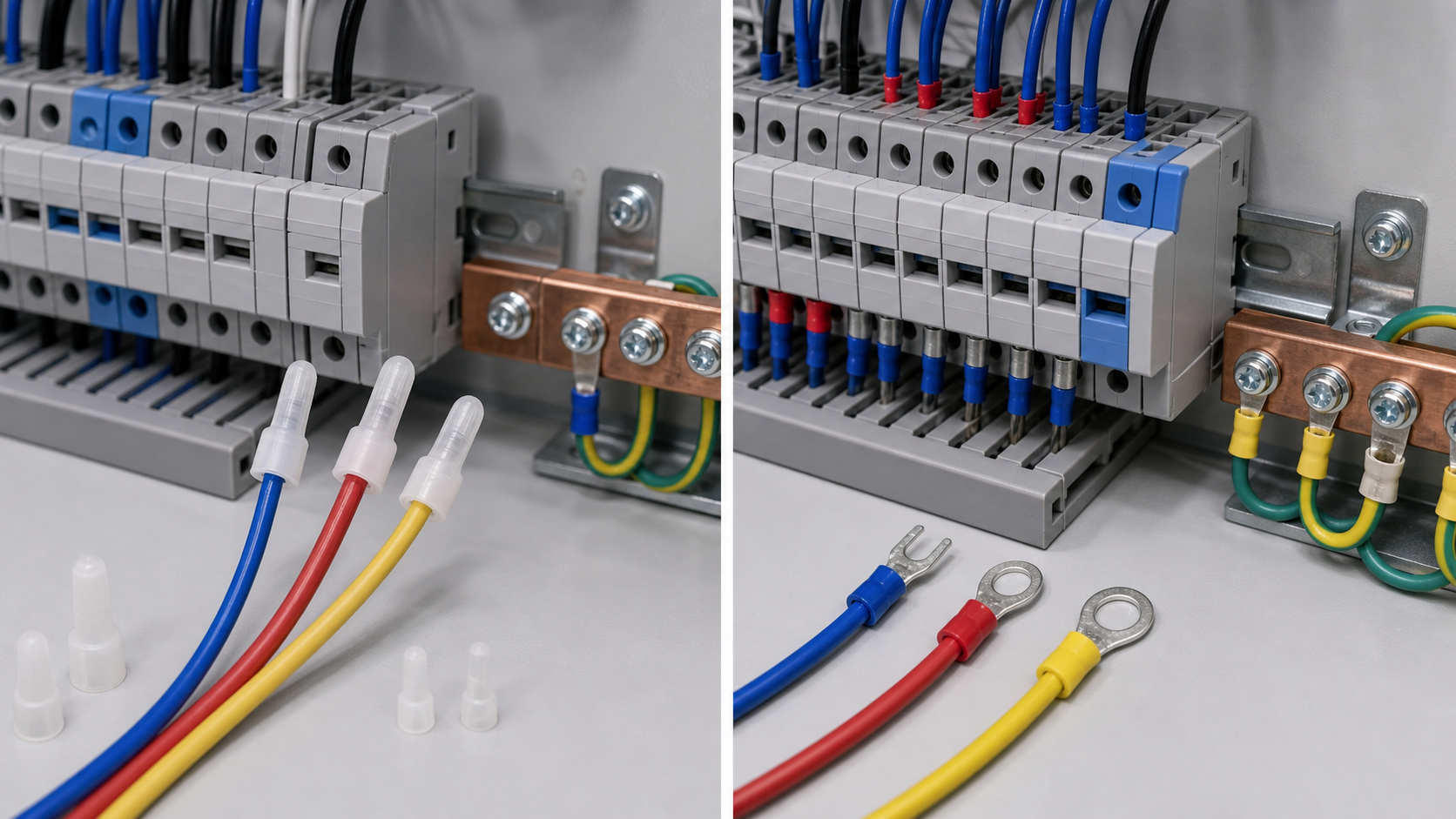
|
Comparison |
Closed-End Connector |
Crimp Terminal |
|
Function |
Seals the wire end; no external connection |
Electrical connection to terminal block / ground bar |
|
Conducts externally |
No |
Yes |
|
Typical use |
Spare wires, reserved maintenance leads |
Terminal-block wiring; ground-bar and main / control-circuit termination |
|
KSS part numbers |
CE series (CE-1–CE-8, 94V-2 / 94V-0) |
ET / EW European ferrules; R / Y / H / PIN bare & insulated terminals |
|
Certification |
UL (E116091), CSA (97798) |
Varies by part number; confirm with sales for formal quotes |
4. Two common mistakes to avoid
Using a closed-end connector as a termination. It has no external connection function—landing one on a terminal block as a connection point causes poor contact and may be mistaken for a “properly terminated” joint, only to fail at inspection.
Assuming a bare terminal equals a sealed one. R / Y / H bare or insulated terminals are still exposed connecting parts; their job is to “connect,” not to “seal,” and they cannot deliver the fully enclosed conductor protection of a closed-end connector. The two are not interchangeable.
Before selecting, ask one question: does this point actually need an external electrical connection? If yes, size a crimp terminal to the terminal block / ground bar; if no, that is where a closed-end connector belongs.
Contact
For complete specifications and quotations on KSS CE-series closed-end connectors, ET / EW European ferrules, or bare / insulated terminals, contact us at sales@jwoyiih.com or call +886-4-8760280 for the full solution package and part number list.
Jwoyiih Enterprise Co., Ltd. | KSS Authorized Distributor