
Cable Tie Selection Guide: Material, Tensile Strength, Temperature Rating and Certification
Cable Tie Selection Guide: Material, Tensile Strength, Temperature Rating and Certification
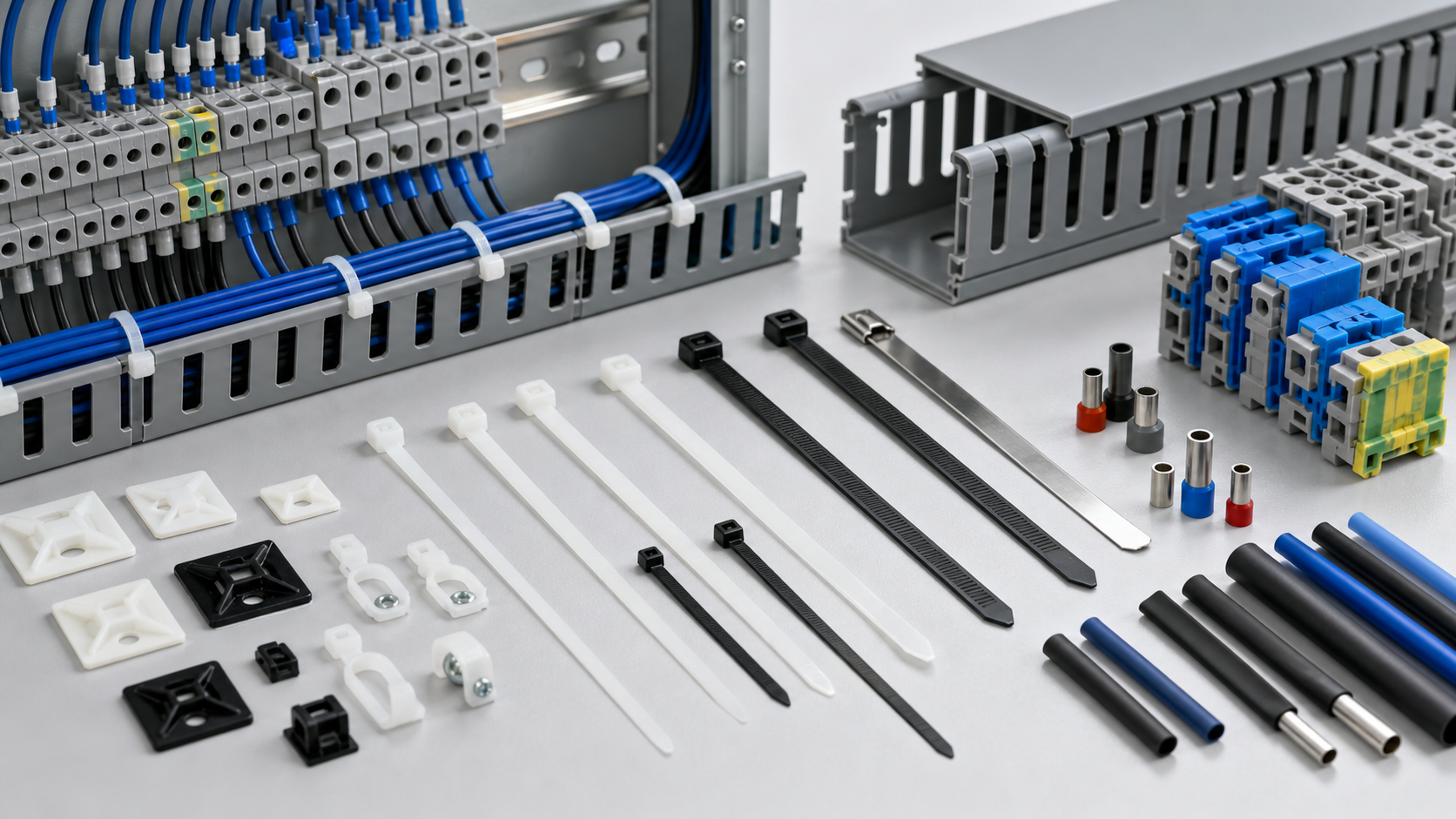
On most control panel and automation BOMs, the cable tie line item reads simply "nylon cable tie, 200mm." The length is right, and whatever is on the shelf gets used. The problem is that a 200mm standard tie, a heat-stabilized tie, a flame-retardant tie, a weather-resistant tie and a stainless steel tie are not the same product — they differ in temperature rating, flammability class, tensile strength and certification coverage. Discovering that during a temperature-rise test, when ties inside the enclosure have gone brittle, or during a customer audit when someone asks "is this part UL recognized?", means a material change late in the build — and the cost and schedule hit has already been taken. Here is what to check, using actual KSS catalog specifications.
1. Three questions to answer before you open the catalog
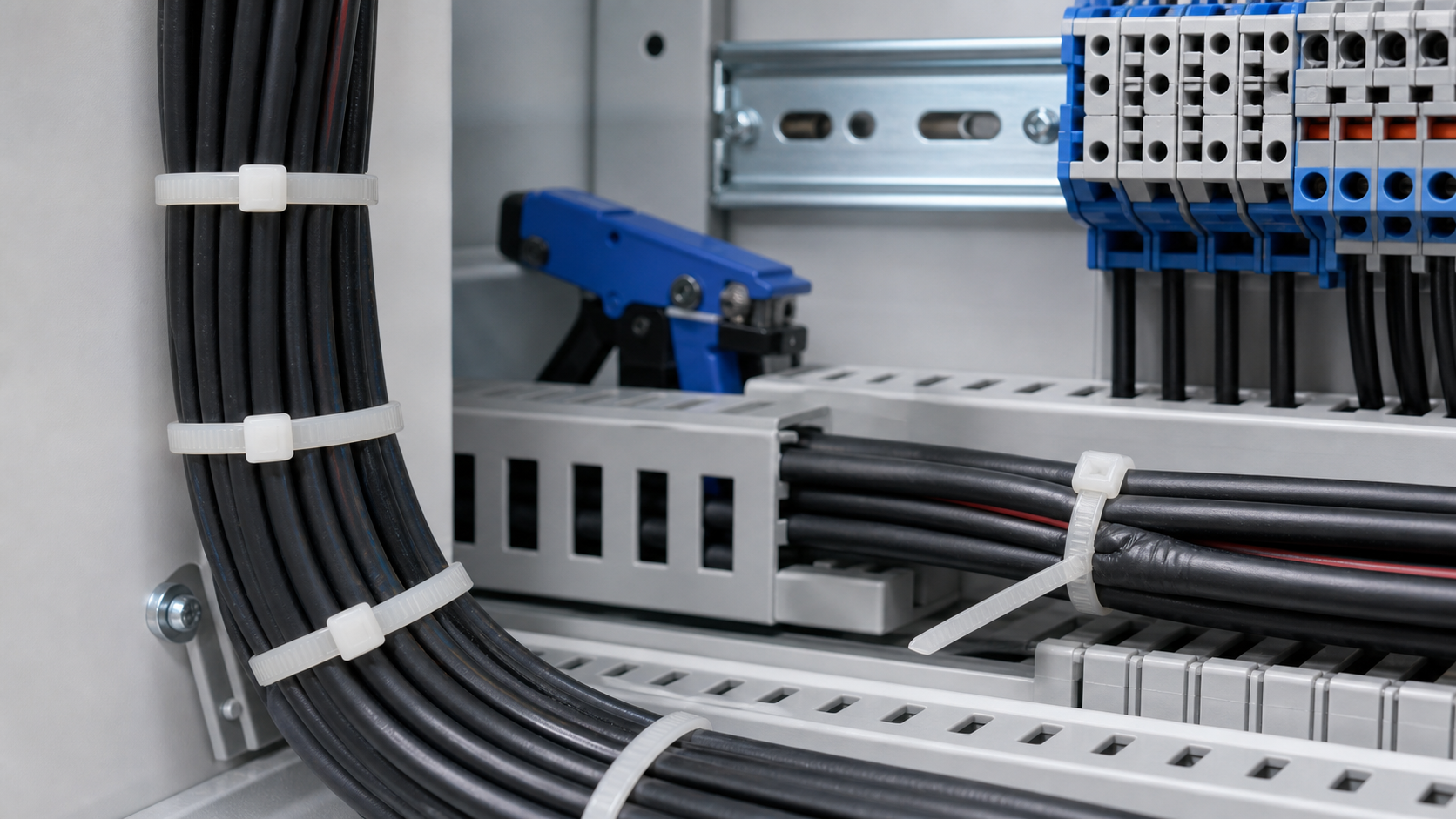
Cable ties look trivial, but the selection logic is the same as for wiring duct or heat-shrink tubing: work backwards from the operating environment.
● What is the temperature at this location? General in-panel wiring and the area around a drive or heating section are very different environments. Standard Nylon 66 tops out at 85°C, heat-stabilized CV-HS reaches 105°C, and only Nylon 46 (CV-N46) reaches 150°C.
● What flammability class does the specification call for? UL94 self-extinguishing ratings run 94HB, 94V-2, then 94V-0, from least to most stringent. Most mainstream KSS cable tie series are rated 94V-2; if the project requires a higher class, specify the flame-retardant CV-V0 (94V-0) explicitly.
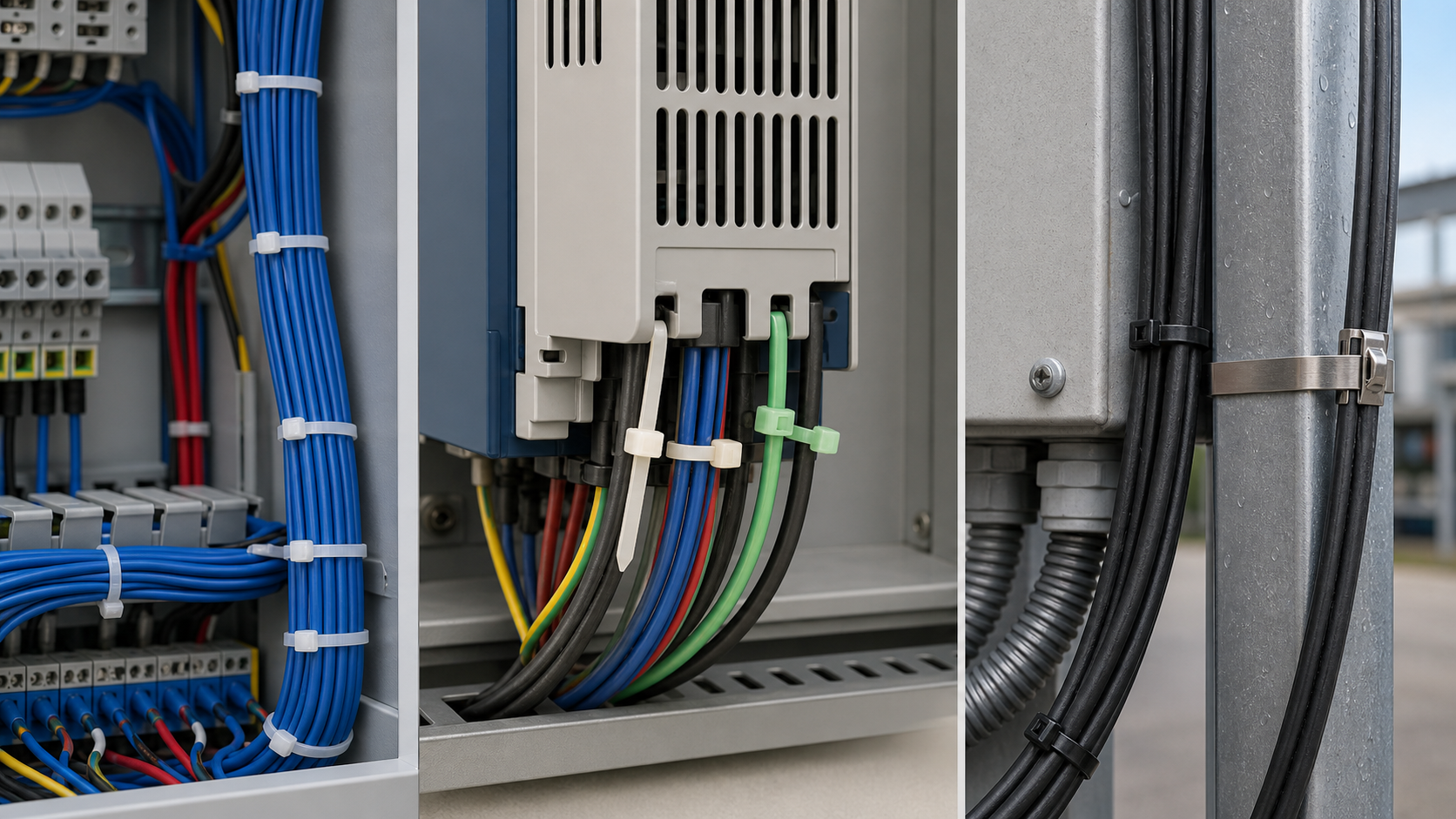
● Indoor, outdoor, or corrosive? Standard ties are fine inside an enclosure. Prolonged sun exposure calls for UV-stabilized CV-W. Only when UV exposure is combined with salt, alkali or acid corrosion do you need Nylon 612 (CV-N612) or stainless steel (BST / BCT). For acid and alkali exposure in chemical plant pipework, there is also the polypropylene CV-PPBK series.
2. Material and temperature comparison
|
Series |
Material / Flammability |
Operating Temp. |
Tensile Strength |
Typical Application |
Catalog Page |
|
CV / CVT (standard) |
UL-recognized Nylon 66 / 94V-2 |
-40 to 85°C |
7-462 lbs (3-210 kgs) |
General in-panel wiring and bundling |
64-65 |
|
CV-W (UV-resistant) |
UL-recognized Nylon 66, UV-stabilized / 94V-2 |
-40 to 85°C |
7-462 lbs (3-210 kgs) |
Outdoor enclosures, prolonged sun exposure |
72-73 |
|
CV-HS (heat stabilized) |
UL-recognized Nylon 66 / 94V-2 |
-40 to 105°C |
18-120 lbs (8-55 kgs) |
Sealed enclosures with elevated internal temperature rise |
68 |
|
CV-N46 (extra high temp.) |
UL-recognized Nylon 46 / 94V-2 |
-40 to 150°C |
18-120 lbs (8-55 kgs) |
Drive cabinets and high-temperature machine wiring |
67 |
|
CV-V0 (flame retardant) |
UL-recognized Nylon 66 / 94V-0 |
Per catalog specification |
18-120 lbs (8-55 kgs) |
Applications with stricter fire-safety requirements |
69 |
|
CV-N612 (weather resistant) |
UL-recognized Nylon 612 / HB |
Per catalog specification |
18-120 lbs (8-55 kgs) |
UV exposure plus salt, alkali, acid rain and zinc chloride corrosion |
68 |
|
CV-CWBK (cold weather) |
UL-recognized Nylon 66 / 94HB |
Min. installation -20°C, min. operating -40°C |
40-120 lbs (18-55 kgs) |
Cold-climate outdoor and machine wiring |
70 |
|
CV-PPBK (polypropylene) |
Polypropylene / flammability per catalog specification |
Per catalog specification |
11-51 lbs (5-23 kgs) |
Acid and alkali resistant; chemical plant pipework fastening |
69 |
|
BST / BCT (stainless steel) |
SS316 (BST) / SS304 (BCT) |
Per catalog specification |
100 lbs (4.6mm standard) to 250 lbs (7.9mm extended) |
Damp, hot or cold harsh environments; engineering, aviation, marine |
97 |
Note: 94V-2, 94V-0 and 94HB are UL94 self-extinguishing classifications. Nylon 46 and Nylon 66 are different base resins — the N46 series reaches 150°C, well above the standard Nylon 66 range. Page numbers refer to the printed KSS catalog.
3. Tensile strength and width matter more than length
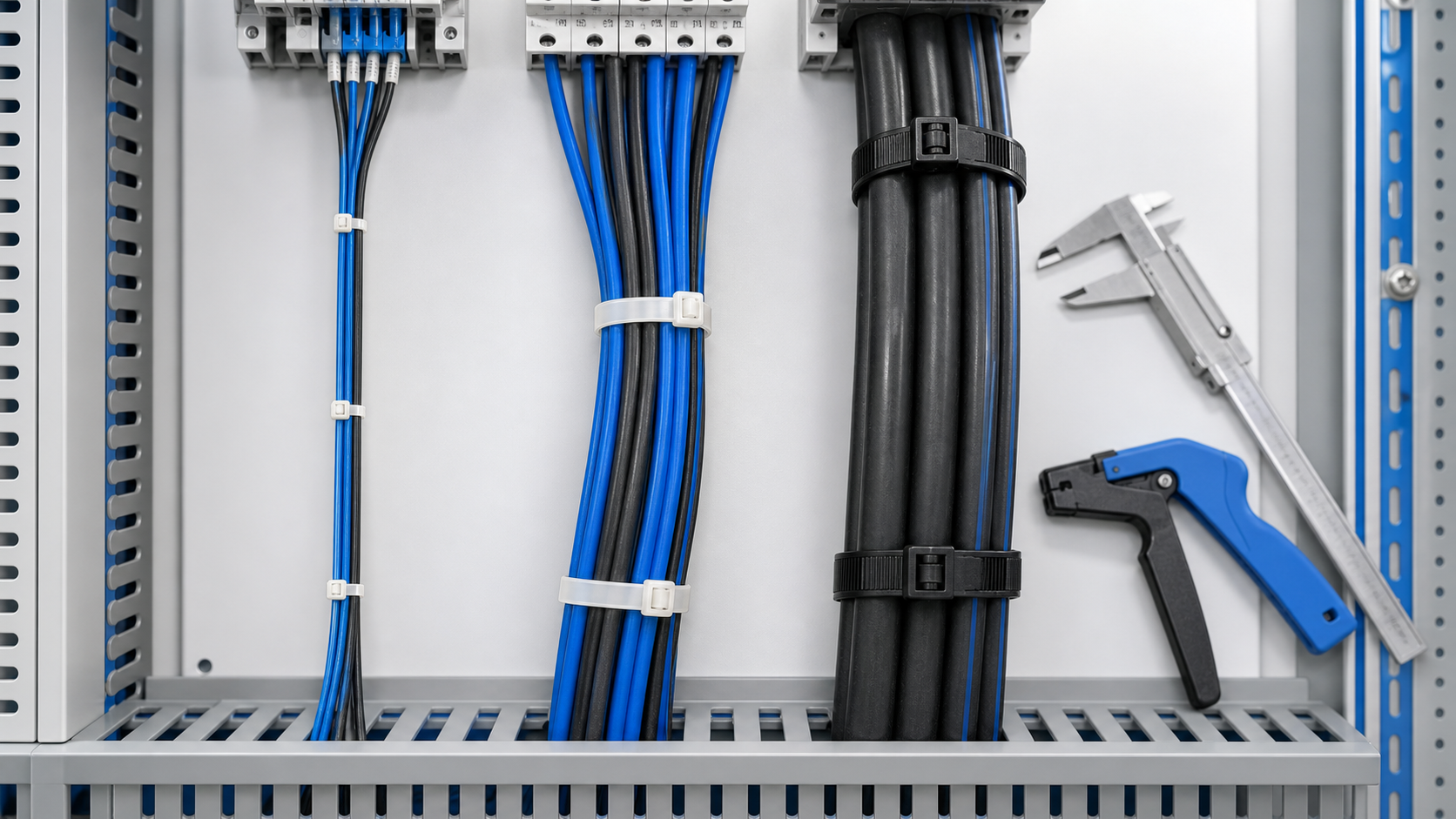
The most common shortcut on the shop floor is to match length only. But what determines whether a tie survives a vibrating environment is width and tensile strength. Within the KSS CV standard series alone, roughly 60 sizes span 63.7 to 1,500mm in length and 2.5 to 9.0mm in width, with tensile strength ranging from 7 lbs (3 kgs) to 462 lbs (210 kgs) — a difference of several dozen times inside a single "CV series."
When the standard series runs out of headroom, there are two common upgrade paths:
● CV-Z heavy-duty series (CV-200Z to CV-368Z): width stays at 4.6-4.8mm while tensile strength reaches 75-80 lbs (34-36 kgs) — useful where a thicker bundle must be secured without stepping up to a wider tie.
● CV-XL / XXL extra heavy duty (CV-230XL to CV-1530XL, CV-255XXL): 12.7-17.8mm wide with 120-250 lbs (55-114 kgs) tensile strength, for large cables and multi-conductor bundles.
Material choice also cuts the other way. The polypropylene CV-PPBK series (CV-100PPBK to CV-550PPBK) spans 100-550mm in length and 2.5-8.0mm in width, and its acid and alkali resistance suits chemical plant pipework — but tensile strength is only 11-51 lbs (5-23 kgs), noticeably below a Nylon 66 standard tie of the same size. If you are specifying PP for chemical resistance, confirm the bundle load still falls within range.
For damp, hot or cold harsh environments, go straight to stainless steel. BST is SS316 and BCT is SS304, in lengths from 127 to 838mm; the standard 4.6mm width is rated 100 lbs (45 kgs) and the extended 7.9mm width 250 lbs (113 kgs). KSS also offers coated stainless ties with an SS316 core and Nylon 11 outer layer: the ASTN ladder-type and the RSTN releasable type, the latter reusable and well suited to locations that are opened frequently for maintenance. For installation, nylon ties pair with the TG series tension tools, while stainless ties require the dedicated TG-20 (automatic) or TG-21 (manual) tool.
4. Certifications are granted by part number, not by product category
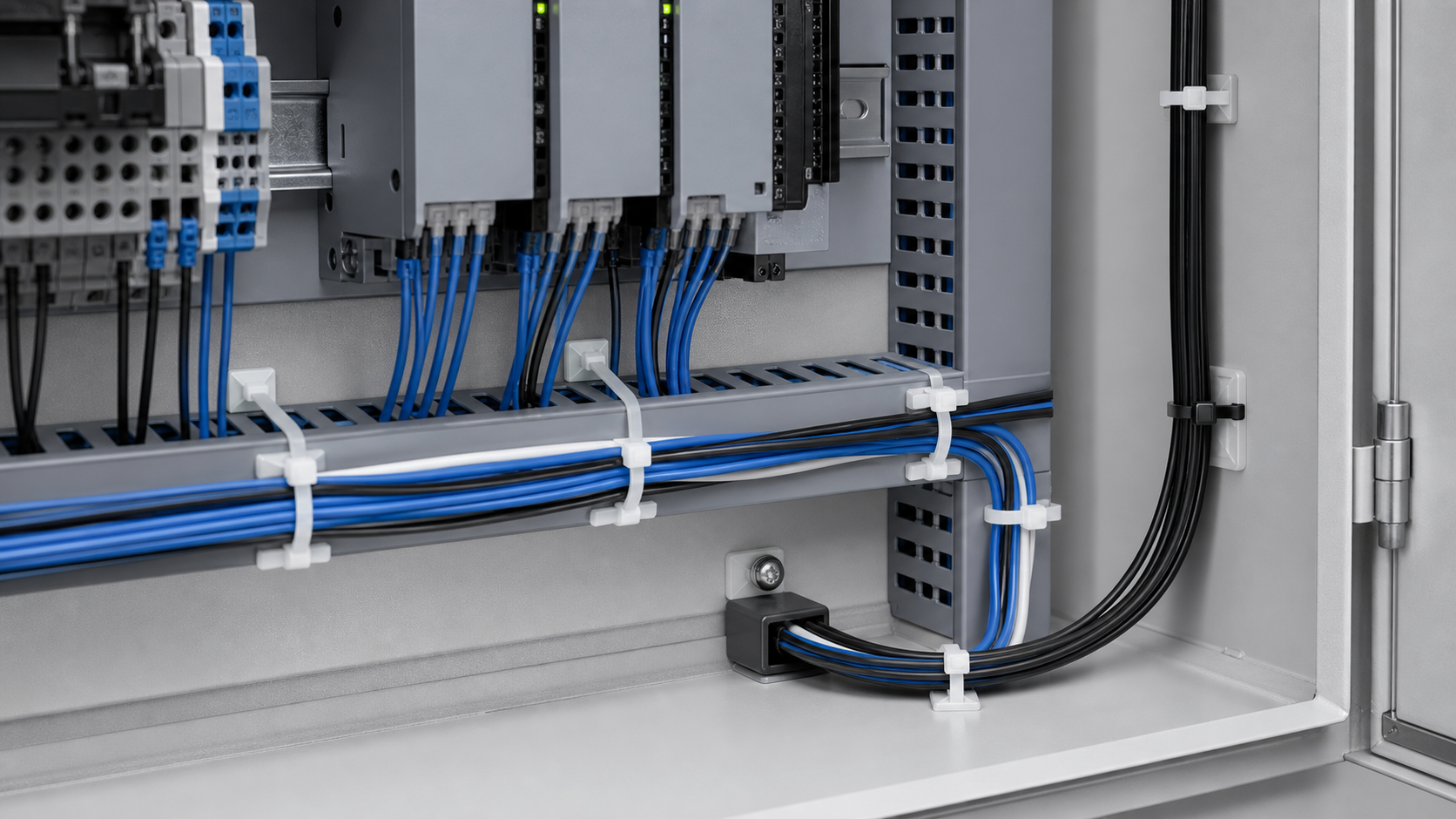
The trap panel builders fall into most often during component review is treating an approval as covering an entire category. Certificates cover specific models. Here is how KSS cable tie approvals break down:
|
Certification |
Cable tie models covered (per KSS official catalog certification overview) |
|
UL Listing Mark (US & Canada) |
CV, CV-W, CV-HS, MCV, PFVS, PSV, PWV, PWVS, TCV, TCVS; stainless steel ties BST, BCT |
|
CSA (Canada & US) |
CV series |
|
VDE (Germany) |
CV, CV-W |
|
DNV (Det Norske Veritas) |
CV / CV-W / TCV / MCV / HV series |
|
Lloyd's Register |
CV / CV-W series |
|
ABS (American Bureau of Shipping) |
CV series plus CTF / CVS / CVT / DCV and other derivative models |
Marine class approvals (DNV, Lloyd’s Register, ABS) exist for shipboard and offshore equipment, but they also serve as useful evidence of material reliability for land-based projects. If your panels ship to a shipyard, an offshore platform or a wind farm, check the covered model list item by item. Certification coverage varies by specific model / SKU; please confirm the applicable part numbers and current certificates with our sales team for any formal project.
5. Three selection mistakes we see most often
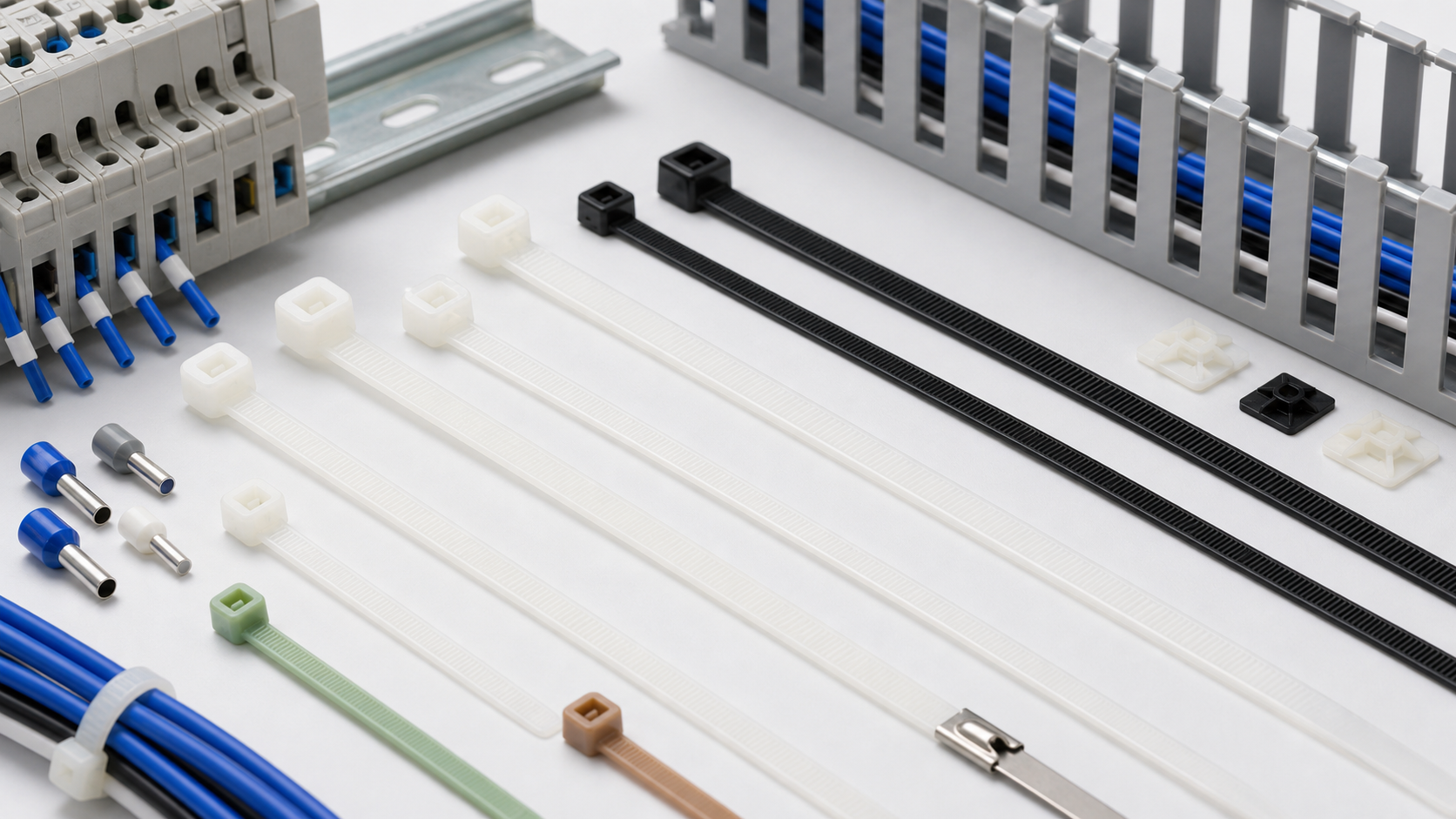
● "94V-2 means fire safety is covered." 94V-2, 94V-0 and 94HB are distinct self-extinguishing classes and are not interchangeable. KSS mainstream cable tie series are 94V-2; if the drawing or specification calls for 94V-0, the CV-V0 series must be specified by name — a standard CV tie is not a substitute.
● "UV resistant means weather and corrosion resistant." CV-W is UV-stabilized Nylon 66, which addresses degradation from prolonged sun exposure. Salt spray, alkali, acid rain or zinc chloride corrosion is a different problem, addressed by Nylon 612 (CV-N612) or by stainless steel BST / BCT.
● "Everything in the series carries the same approvals." Coverage is defined per model: CSA covers the CV series, VDE covers CV and CV-W, and Lloyd’s Register covers CV / CV-W only. Where certification is a hard requirement, confirm the specific model appears on the certificate before locking the part number.
Answer those three questions — temperature, flammability, environment — then verify tensile strength and certification coverage, and cable tie selection stops being a source of surprises. If the project also involves machine wiring and production line installations, it is worth reviewing wiring duct, cable glands and heat-shrink tubing at the same time, so that a single accessory specification gap does not hold up approval of the whole assembly.
About KSS: the manufacturing depth behind a full cable tie range
Looking back at the comparison tables above, one question is worth asking: how does a single product category — the cable tie — branch into this many materials and specifications? The answer lies on the manufacturing side. Founded in 1969, KSS is a global leader in wiring accessories, selling into 128 countries and serving more than 40,000 customers as Asia’s largest manufacturer of cable ties and wiring accessories. Its dedicated R&D and production park covers 500,000 square meters, equipped throughout with advanced high-speed injection and extrusion molding machinery from Europe, the US and Japan, with cable tie output reaching 50,000,000 pieces per day and a fully automated smart warehouse with capacity equivalent to more than 1,000 twenty-foot containers.
That scale, combined with in-house material development, is what allows the cable tie range to extend from standard Nylon 66 through high-temperature Nylon 46, flame-retardant 94V-0, weather-resistant Nylon 612, cold-weather grades, acid- and alkali-resistant polypropylene, and on to stainless steel — with UL, CSA, VDE and DNV / Lloyd’s Register / ABS approvals obtained across the range. For the specifier, the practical benefit is straightforward: an unusual temperature, fire-safety or corrosion requirement does not mean qualifying a new supplier, because the matching part number sits within the same brand, backed by consistent certification documentation and quality standards.
Contact
For complete specifications and pricing on KSS CV series cable ties, flame-retardant CV-V0, high-temperature CV-N46, weather-resistant CV-N612 or stainless steel BST / BCT series, please get in touch:
Jwoyiih Enterprise Co., Ltd.
Contact us at sales@jwoyiih.com or call +886-4-8760280 for the full solution package and part number list.